.svg)



UNSW had developed a predictive model to identify struggling students early. Their challenge was to define how the AI should interpret risk, intervene with students and coordinate a complex network of support services. Through human-centred design, Sandbox helped UNSW build an internationally recognised service that has reduced student failure rates at institutional scale.

UNSW had promising early results from testing it's predictive model, but the model alone couldn't determine the right intervention for the right student at the right time. Sandbox was engaged to design a service layer to translate the predictive intelligence into appropriate, personalised student support, ensuring students felt supported rather than surveilled.
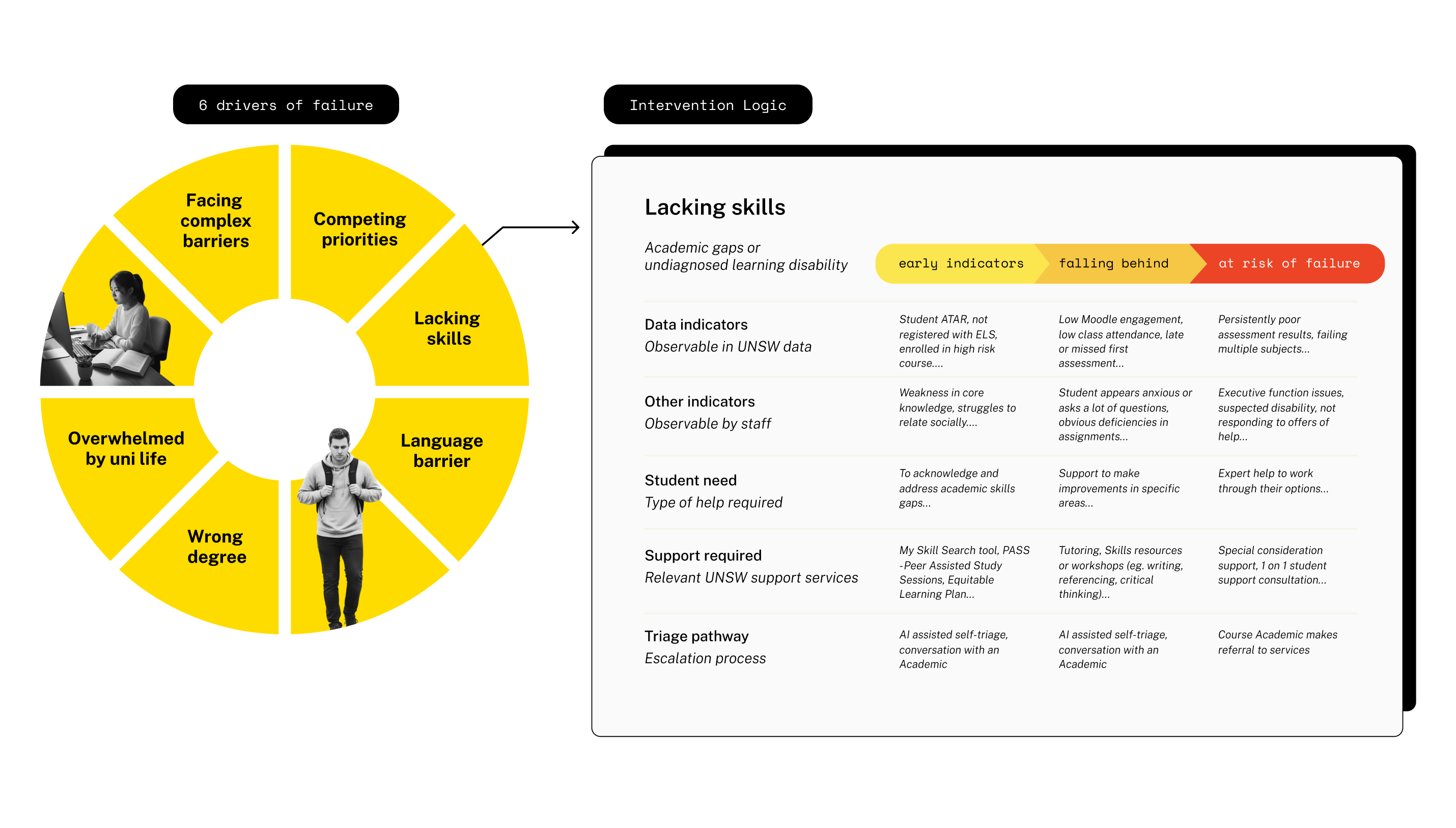
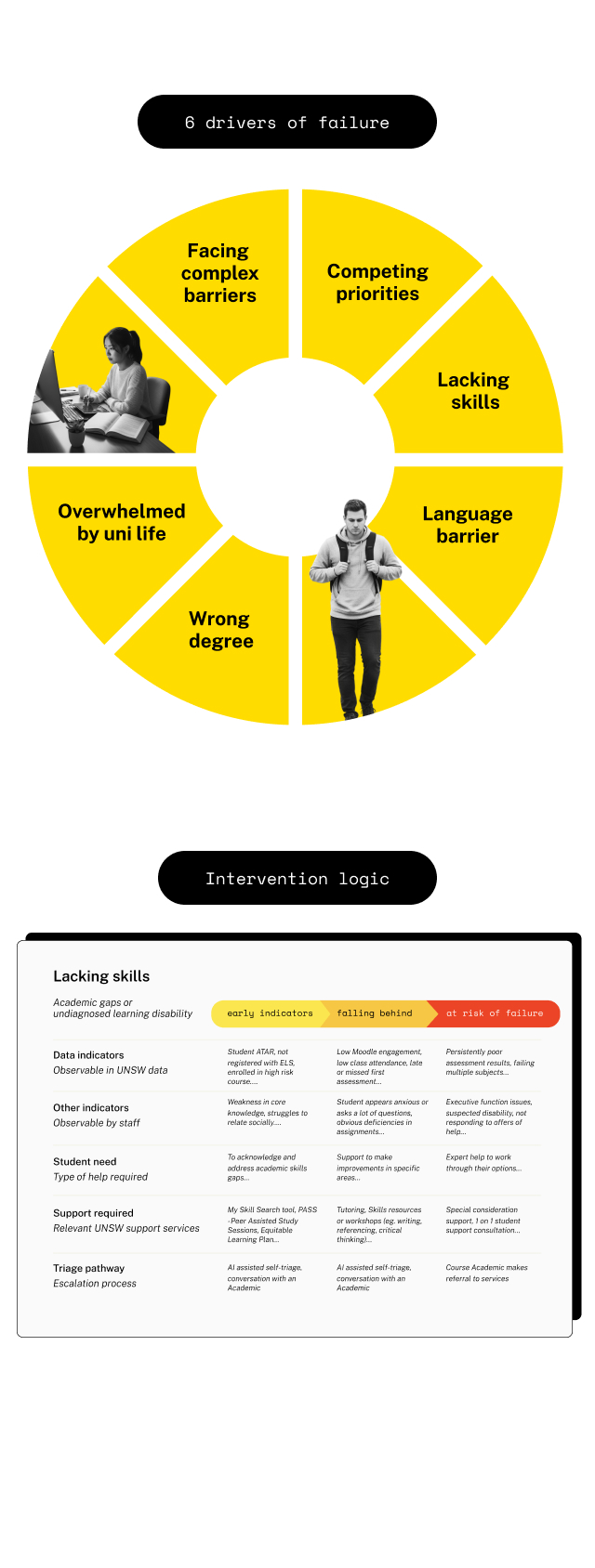
Sandbox led co-design sessions with UNSW's frontline support staff to capture how experienced practitioners recognise early signs of academic struggle, sequence interventions and tailor communication to different student circumstances. These human insights were translated into structured risk schemas, intervention matrices and communication guidelines that were implemented directly by data science and engineering teams as the rules governing the AI platform's behaviour.
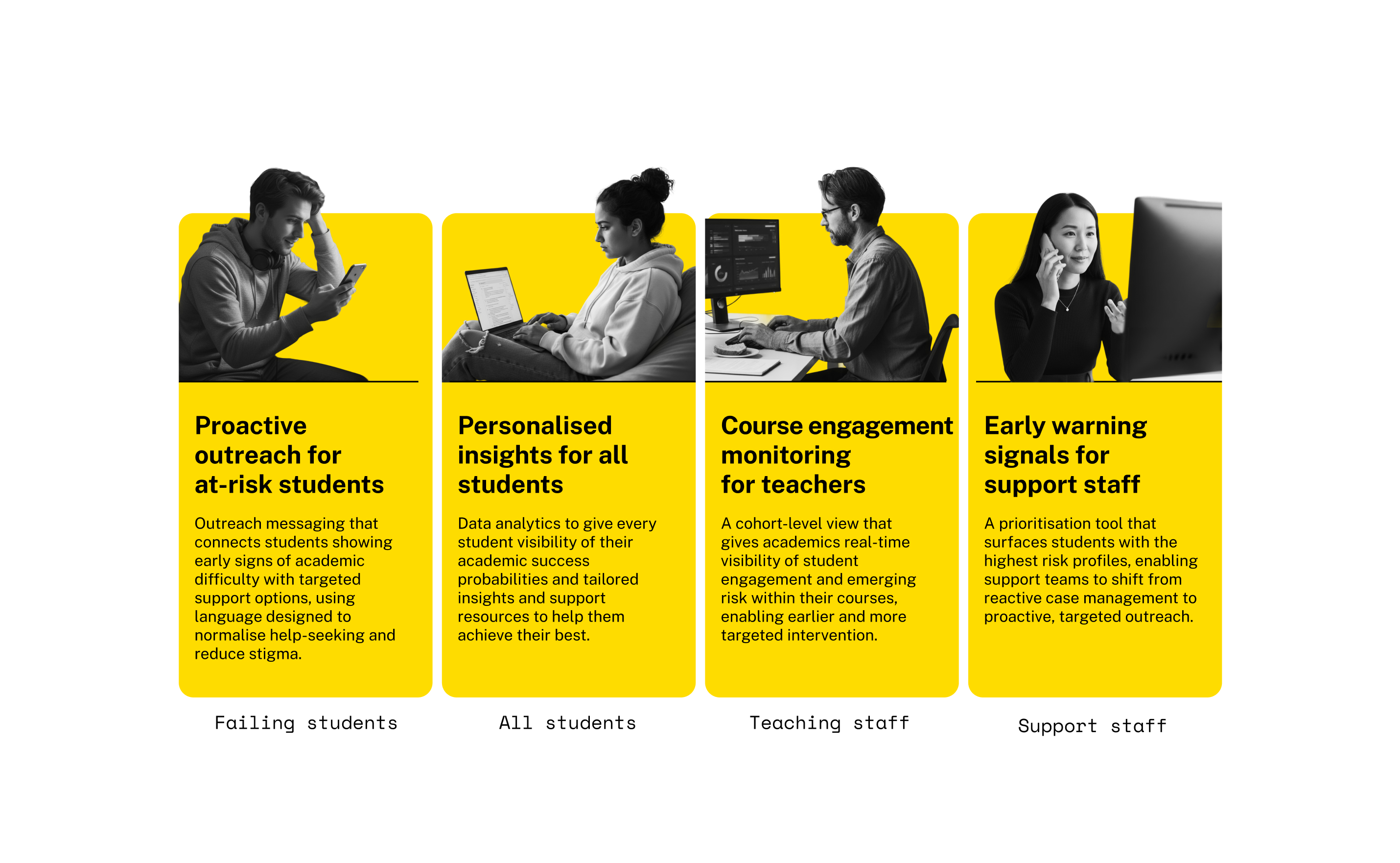
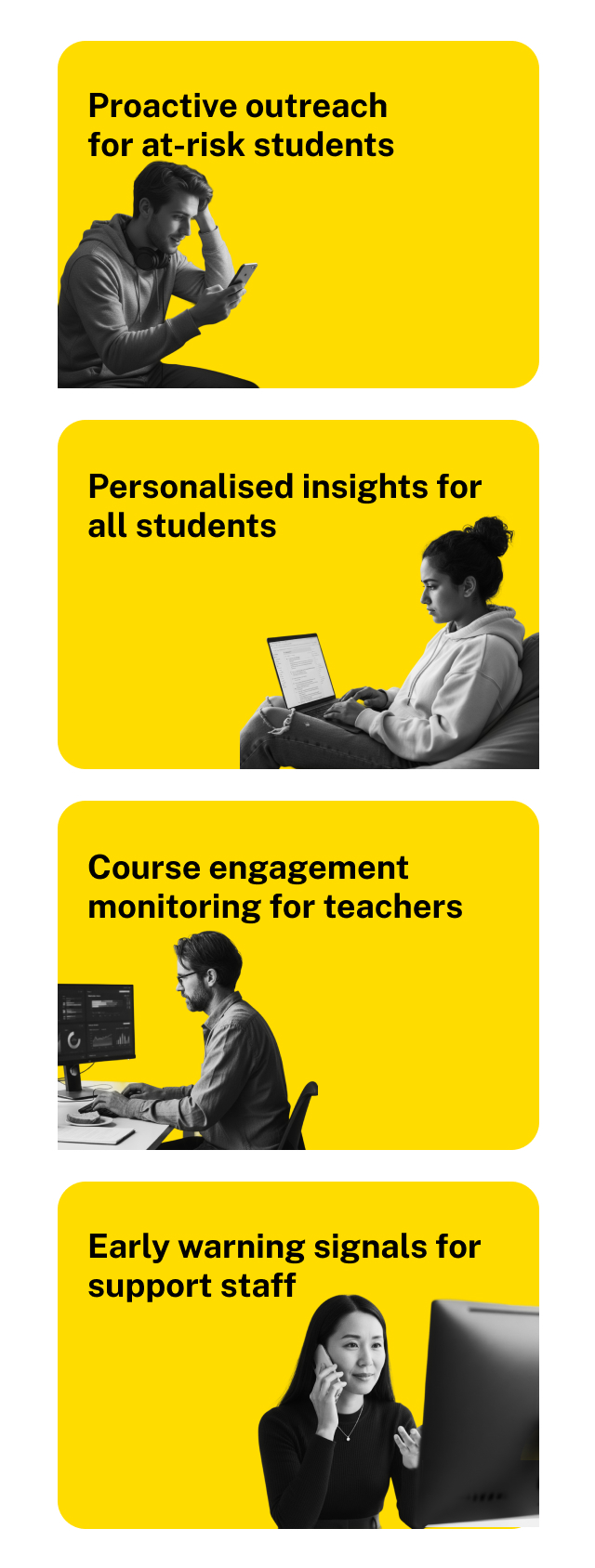
Prototyping and testing with students and staff also revealed that different user groups needed fundamentally different views of the same predictive intelligence. This led to purpose-built applications for students, academics and support services teams.
.png)

Today the Academic Success Monitor supports the majority of UNSW students and courses.
The benefits for students and staff have been wide-ranging, including:
• A reduction in failure rates, equivalent to roughly 500 fewer students failing per year
• Students receive earlier, more personalised support
• Teaching and support staff save time and gain visibility of emerging risk
• Vulnerable students are supported proactively
The project has received international recognition including Gartner Eye on Innovation, the QS Reimagine Education Awards and inclusion in a UNESCO digital education impact case study.
Learn more about UNSW's initiative at UNSW's eLearning channel.
